From Resistance to Renewal: Wendy’s Leadership Journey Through the TOSHIBA TEKA Greatness Games

When Transformation Stops Being a Concept
Most organisations talk about transformation. Very few are willing to live through it.
Real transformation challenges habits, questions assumptions, and forces leaders to confront uncertainty, especially in an age shaped by AI. At Leadapreneur, we often see the moment when organisations realise that doing “more of the same” is no longer enough.
This was the context in which the TOSHIBA TEKA Greatness Games was born and the lens through which Wendy’s leadership journey unfolded. Faced with rapid change and rising expectations, leadership was no longer about preserving what worked before, but about deciding how to lead forward.
Leadership Begins With a Decision
Launching the TOSHIBA TEKA Greatness Games was not an obvious or easy choice.
The idea surfaced real concerns across the organisation. Some feared AI would replace jobs. Others questioned whether people could commit to an intense, multi-week journey. Many felt more comfortable staying within familiar routines rather than stepping into uncertainty.
These reactions were human and expected.
But for Wendy, leadership meant choosing progress over comfort.
As she reflected:
“If we wanted to grow, we had to be bold, to step out of our comfort zones, try new things, leverage AI, and do what our competitors haven’t done.”
Transformation, in this case, was not a slogan. It was a leadership decision.
What Happened During the Six-Week Journey
The six-week TOSHIBA TEKA Greatness Games was designed as a hands-on leadership and AI journey, not a classroom programme and not a theoretical discussion.
Over the six weeks, participants moved through a structured series of physical workshops, live sessions, and guided challenges, all anchored in real business problems. Instead of working on hypothetical cases, leaders identified inefficiencies, customer experience gaps, and operational challenges from their own day-to-day work.
AI was introduced as a practical leadership tool supporting thinking, idea development, prototyping, and communication. Leaders learned how to work with AI to accelerate clarity and decision-making, while keeping human judgment firmly in control.
The response was immediate and telling.
More than 60 employees stepped forward at the start of the programme. As the intensity increased, participation naturally narrowed. By the end of the six weeks, 33 leaders completed the full journey, a strong completion rate for a demanding, multi-week transformation programme.
This was not attrition by failure. It was a transformation by choice.
What Changed In Outcomes and Mindsets
By the end of the six weeks, the shift was unmistakable.
Teams didn’t walk away with abstract concepts. They presented real, structured project ideas, shaped through disciplined thinking, collaboration, and AI-enabled workflows.
Most strikingly, these projects collectively generated RM 12.4 million in validated potential business value, spanning productivity improvements, operational efficiency, and revenue-related opportunities. The result demonstrated how leadership, when paired with AI capability and structured execution, can translate learning into tangible impact.
Beyond the numbers, leadership behaviour began to shift.
Across the organisation, the Greatness Games sparked:
Stronger cross-functional collaboration
Greater confidence in using AI responsibly and practically
A move from waiting for direction to taking ownership and initiative
For Wendy, seeing this change take shape, not just in outcomes, but in people, was deeply rewarding.
Wendy’s Perspective: Leading From Inside the Experience
Crucially, this was not a programme led from a distance.
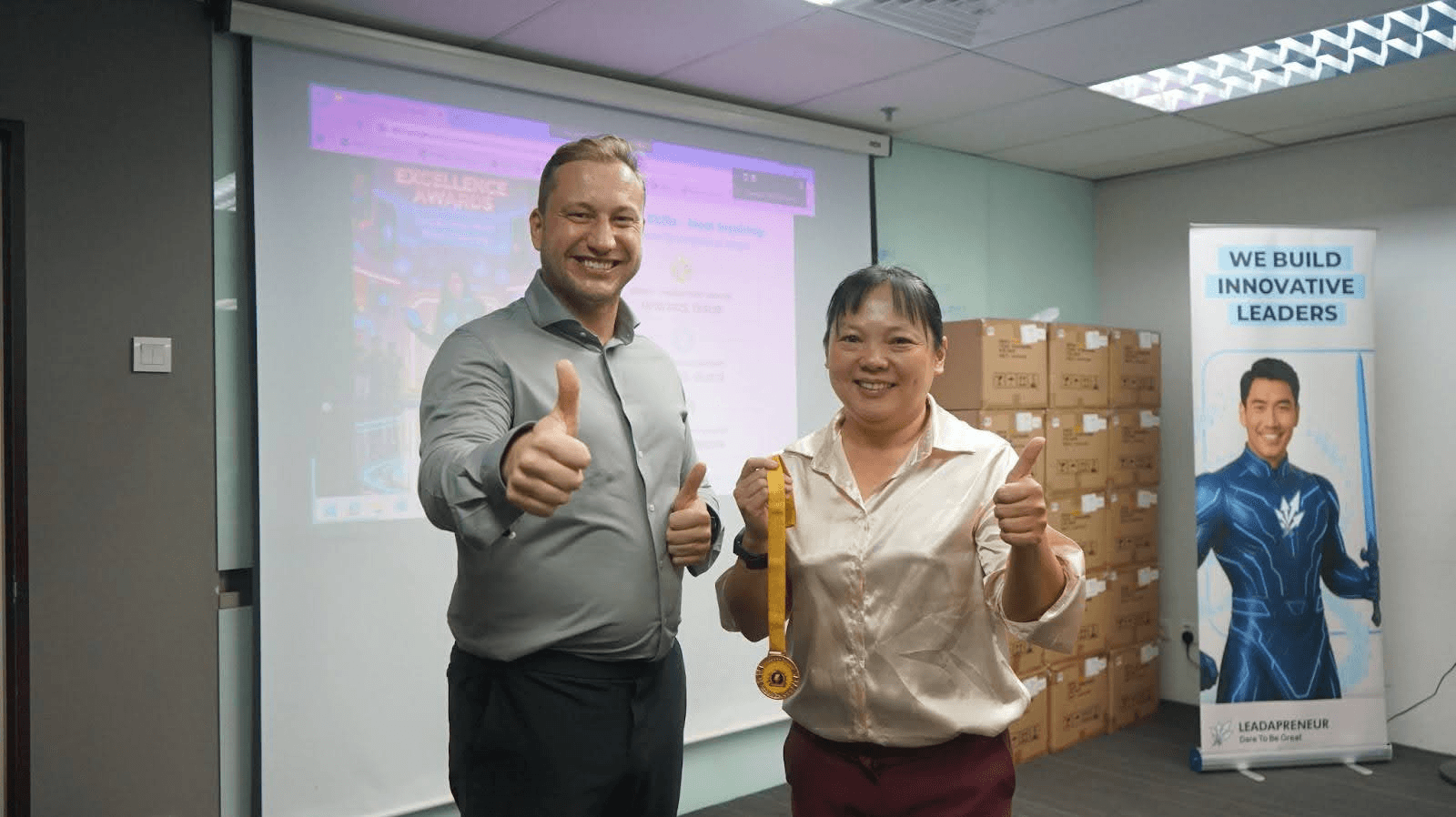
Beyond initiating the Greatness Games, Wendy made a conscious leadership decision to join the journey herself, as a participant.
As she shared in her own reflection:
“Beyond spearheading the program, I also joined as a participant. And that decision changed me.”
Experiencing the same uncertainty, learning curve, and intensity reshaped how she viewed leadership in the age of AI. The journey challenged her assumptions, stretched her thinking, and reinforced a powerful truth: AI does not replace leaders; it amplifies those willing to learn.
Her full reflection can be read on LinkedIn here.
Transformation Doesn’t End After Six Weeks
The six-week Greatness Games was never meant to be an endpoint.
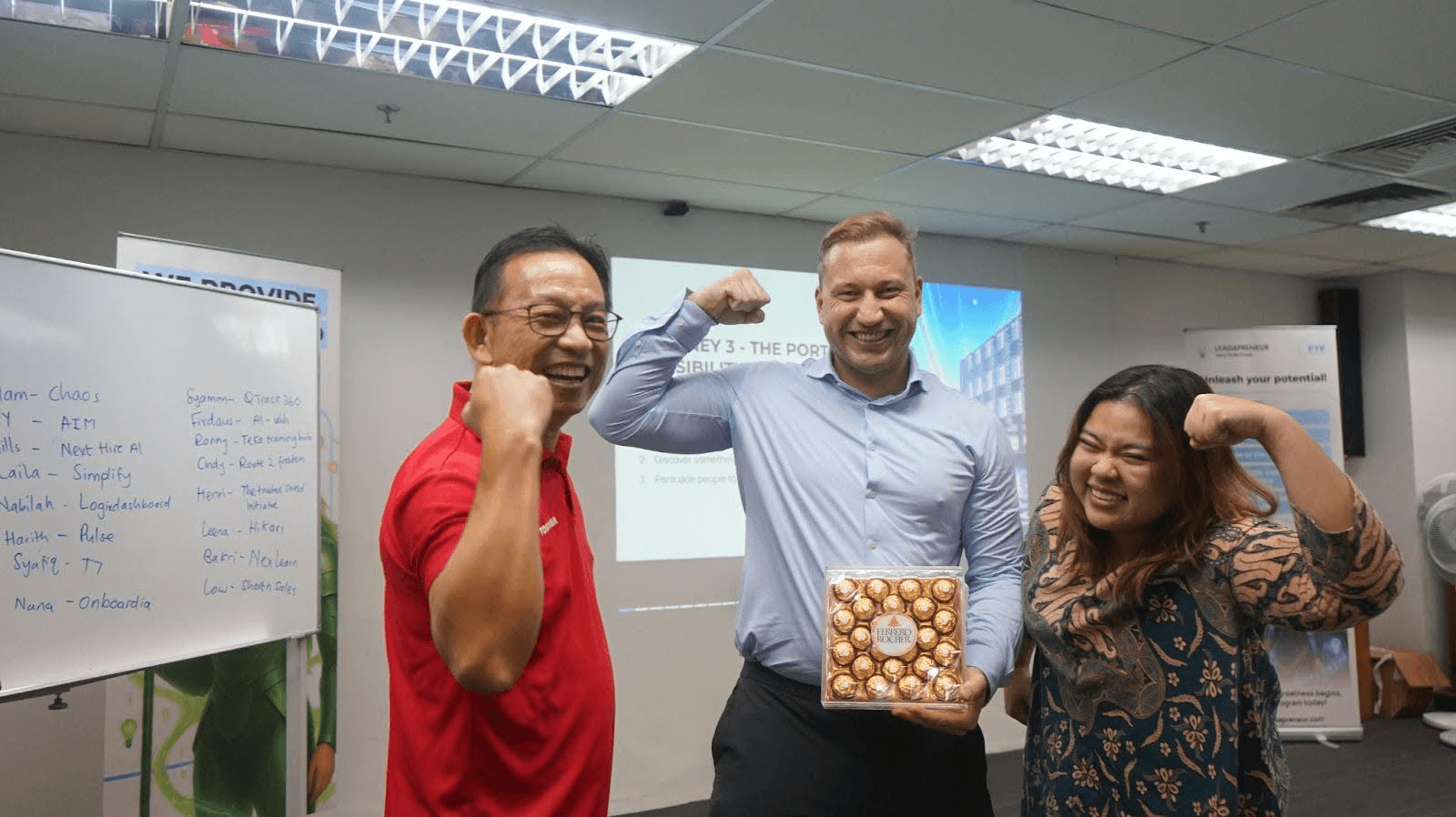
It marked the foundation for a longer leadership and AI journey, one that continues with Jan Henrik Bartscht and the Leadapreneur team, building from ideas into implementation, and from learning into sustained impact.
What began with hesitation evolved into momentum.
What started as resistance turned into renewal.
This is leadership transformation in the age of AI, not polished, not comfortable, but real.
And real transformation always begins with a decision.